



Your 3PL warehouse lease should be contributing to EBITDA — not just rent expense!
Every 3PL today is dealing with at least one — and usually several — of the following:
- Upcoming lease expirations
- Active pursuit of new customer contracts
- Network expansion or market densification
- Evaluation of facility consolidations
- Reassessment of labor availability and cost
Because of this, the real decision is not whether this strategy is relevant — it’s whether you want to continue to leave meaningful money on the table.
3PL margins are thin — everyone knows that. What many Third-Party Logistics Providers (3PLs) still overlook is that their real estate lease is one of the few remaining levers capable of generating immediate, non-operational cash, if structured correctly.
Armstrong & Associates, Inc. (A&A’s) strategic real estate partner has developed one of the most financially aggressive and differentiated leasing strategies in the 3PL sector, capable of generating tenant-side profit within 45–60 days of lease execution — without changing operations or increasing rent.
Historically, the financial upside created when a new lease stabilized a vacant industrial asset flowed entirely to landlords and investors. That is no longer the case. Today’s institutional demand for net-leased, income-producing industrial real estate has shifted negotiating leverage toward scaled, creditworthy tenants. In other words, 3PLs are now creating significant value simply by signing leases — whether they realize it or not.
The “Real Estate Lease Monetization Strategy” is designed to ensure that value no longer goes entirely to the landlord.
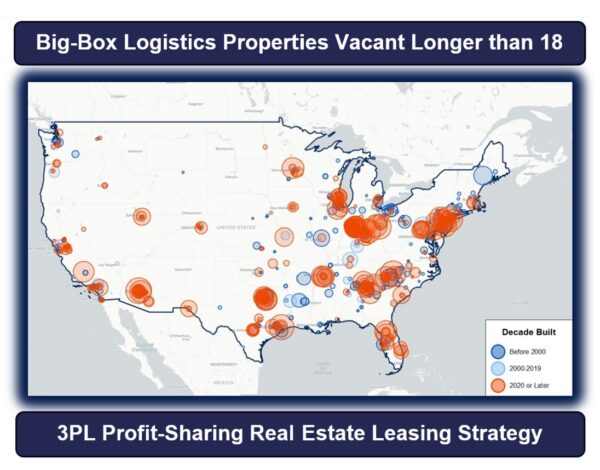
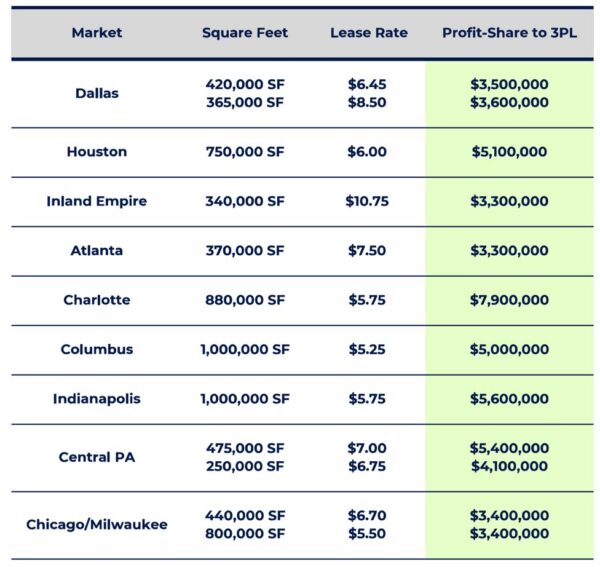
Below is a sampling of identified opportunities across the U.S., illustrating facility size, market lease rates, and — most importantly — the potential tenant-side profit available simply by leasing space you are already planning to lease.